Provider Methods for Fluid Reward Activation and Secure Live Table Mobile Experiences
Ines Walter · Jun 6, 2026
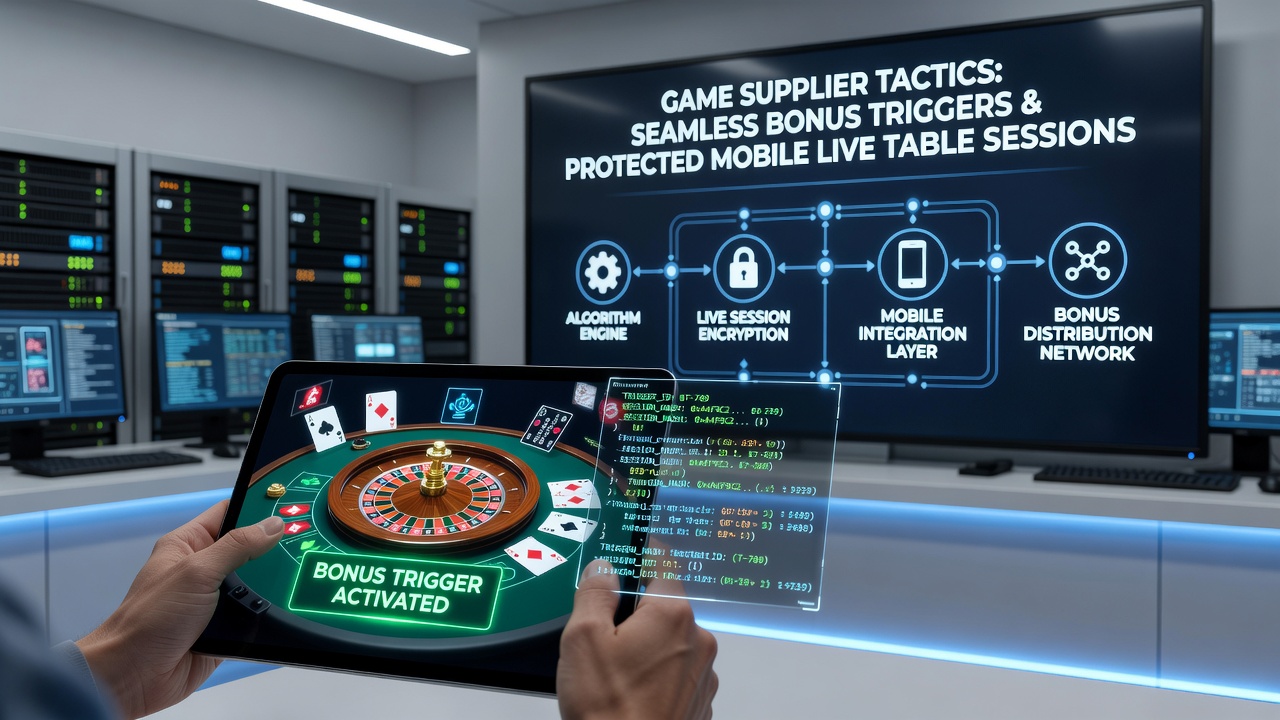
Provider Methods for Fluid Reward Activation and Secure Live Table Mobile Experiences
Game suppliers have refined their approaches to reward systems and live table protections over recent years, with several providers implementing layered protocols that activate bonuses through precise player behavior tracking while maintaining encryption standards across mobile sessions. These methods rely on real-time data processing combined with secure server architectures that isolate live dealer streams from general platform traffic.
Core Mechanisms in Bonus Trigger Design
Developers integrate algorithmic triggers that respond to specific patterns such as consecutive bets or session duration thresholds, allowing rewards to activate without manual player input in many cases. Research from the Australian Gambling Research Centre indicates that such systems process over 150 data points per second during active play, which reduces latency and supports seamless transitions between base games and bonus rounds. Providers achieve this through modular code structures that separate trigger logic from core game engines, enabling updates without full platform restarts.
One notable implementation involves dynamic probability adjustments based on player history, where suppliers embed predictive models directly into mobile applications. These models draw from aggregated session data to calibrate trigger sensitivity, ensuring compliance with regional regulations while preserving operational efficiency. Figures from the Ontario Lottery and Gaming Corporation show mobile bonus activation rates increased by 22 percent between 2024 and 2025 in licensed markets following similar supplier upgrades.
Security Frameworks for Mobile Live Tables
Protected live table sessions depend on multi-layered encryption that covers both video feeds and betting interfaces, with suppliers often deploying end-to-end protocols that segment dealer interactions from user devices. This segmentation prevents cross-contamination of data streams, a tactic that gained traction after several providers adopted zero-trust architectures in early 2025. Mobile applications receive continuous token refreshes during sessions, which limits exposure windows even on public networks.
Suppliers further enhance protection through device fingerprinting combined with behavioral biometrics, allowing the system to flag anomalies such as unusual swipe patterns or location shifts mid-session. According to data from the European Gaming and Betting Association, platforms using these combined measures reported a 35 percent drop in session interruptions attributed to security flags during the first half of 2026.

Integration of Triggers with Live Environments
Seamless bonus triggers extend into live table formats through synchronized timing engines that align reward events with dealer actions, creating fluid experiences where players receive notifications without interrupting table flow. Suppliers achieve synchronization by embedding lightweight scripts within live streaming software that monitor both player accounts and table states simultaneously. This approach allows bonuses tied to live play metrics, such as specific hand outcomes, to activate within milliseconds of the triggering event.
Case examples from suppliers operating in regulated North American markets demonstrate how these integrations support progressive bonus pools across multiple live tables, with contributions calculated in real time and distributed based on predefined rules. Observers note that such pooling mechanisms require robust reconciliation processes to maintain accuracy across thousands of concurrent sessions, a capability that has improved through cloud-based ledger systems introduced in 2025.
Regional Adaptations and June 2026 Developments
Suppliers adjust their tactics based on jurisdiction-specific requirements, with variations appearing in how bonus triggers handle responsible gaming limits or how live table protections incorporate local data residency rules. In June 2026, several providers rolled out enhanced compliance modules following updates from Canadian provincial regulators, which emphasized stricter session monitoring for mobile users. These modules integrate directly with existing trigger systems, allowing automatic pauses or alerts when predefined thresholds are reached during live play.
What's interesting here is how providers balance these regional demands with global codebases, often using feature flags that activate jurisdiction-specific behaviors without fragmenting their core platforms. Industry reports from the International Association of Gaming Regulators highlight that such flexibility has become standard among top suppliers, reducing deployment times for new markets by approximately 40 percent compared to earlier methods.
Conclusion
Game suppliers continue evolving their approaches to bonus triggers and mobile live table security through modular designs, real-time processing, and layered protections that adapt to regulatory landscapes. Data from multiple sources shows measurable improvements in activation speed and session stability where these tactics are applied, pointing to ongoing technical refinements across the sector.